June 15–18, 2026
CYPHER IPT 2026 Agenda
Integrated Project Team Meetings — Cyber-Physical Security & Resilience
CUI Session I
Setting the Stage for the CUI Perspectives
Program logic: Day 1 is CUI. The objective is to set a common baseline of naval challenges and priorities for consideration by CUI attendees during the upcoming open sessions — framing the week's theme: what the adversary sees that we sometimes don't.
1:30 – 1:45 PM
Welcome to Arcfield — Agenda Overview & Day 1 Objectives
Fabian-Gaines Conference Room
2 speakers
Welcome to Arcfield — Agenda Overview & Day 1 Objectives
Fabian-Gaines Conference Room
Speakers
Joe Marino
CEO Emeritus
Rite-Solutions, Inc.
Paul Boivin
Senior Cybersecurity Engineer
Arcfield
1:45 – 2:30 PM
Opening Keynote
Fabian-Gaines Conference Room
1 speaker
Opening Keynote
Fabian-Gaines Conference Room
Keynote Speaker
Bryan Enloe
Chief Information Officer
MIKEL Inc.
2:30 – 3:30 PM
CUI Panel A — Framing the Challenge: Shipyard Cybersecurity, Resilience & Open-Session Research Priorities
Fabian-Gaines Conference Room
4 speakers
CUI Panel A — Framing the Challenge: Shipyard Cybersecurity, Resilience & Open-Session Research Priorities
Fabian-Gaines Conference Room
Moderator
Paul Bancroft
Systems Engineer
Arcfield
Panelists
Geoff Davis
Principal Cyber Consultant
ABS Group
Gary Francella
U.S. Government Programs
Siemens Government Technologies (SGT)
Manbir Sodhi
Professor, Mechanical, Industrial & Systems Engineering
University of Rhode Island
3:45 – 4:45 PM
CUI Panel B — Naval Shipboard CPS Cyber Challenges & Solutions
Fabian-Gaines Conference Room
4 speakers
CUI Panel B — Naval Shipboard CPS Cyber Challenges & Solutions
Fabian-Gaines Conference Room
Moderator
Paul Boivin
Senior Cybersecurity Engineer
Arcfield
Panelists
Joe Bransfield
Scientific & Technical Intelligence Liaison Officer (STILO)
NUWC Division Newport
Bryan Enloe
Chief Information Officer
MIKEL Inc.
Ryan Nguyen
AI Capabilities Lead
Arcfield
Open Session · Day 1
Why It Matters: From Shipyard to Fleet
Program logic: Day 2 opens to a broader audience. The arc moves from why OT cybersecurity is urgent, to what the commercial and Navy worlds face in practice, to how Shipyard 4.0 connects to it, and finally to the tools beginning to help us.
9:00 – 9:15 AM
Opening Remarks
FCAE Lower-Level Rm 010 & 025
2 speakers
Opening Remarks
FCAE Lower-Level Rm 010 & 025
Speakers
AM
Anthony Marchese
Dean, College of Engineering
University of Rhode Island
MA
Michele Anderson
Program Officer
Office of Naval Research
9:15 – 10:30 AM
Panel A — Commercial Shipbuilding Perspectives: Benefits, Vulnerabilities & Solutions in Shipyard 4.0
FCAE Lower-Level Rm 010 & 025
5 speakers
Panel A — Commercial Shipbuilding Perspectives: Benefits, Vulnerabilities & Solutions in Shipyard 4.0
FCAE Lower-Level Rm 010 & 025
Moderator
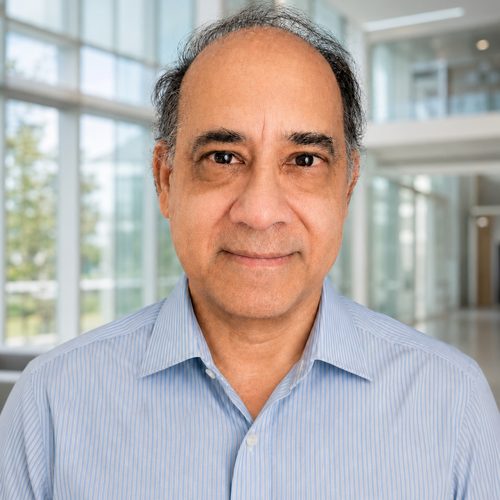
Manbir Sodhi
Professor, Mechanical, Industrial & Systems Engineering
University of Rhode Island
Dr. Manbir S. Sodhi is a Professor of Mechanical, Industrial, and Systems Engineering at the University of Rhode Island. He earned his Ph.D. in Industrial Engineering from the University of Arizona and is recognized for research in optimization, manufacturing systems, sustainable engineering, cyber-physical systems, and digital twins. He has organized defense and industry workshops on fleet scheduling, smart manufacturing, and digital twins, served as department chair, and consulted with NATO, NUWC, and Submarine Forces Atlantic. His honors include the Carlotti Faculty Excellence Award and U.S. Navy Summer Faculty Fellowship.
Panelists
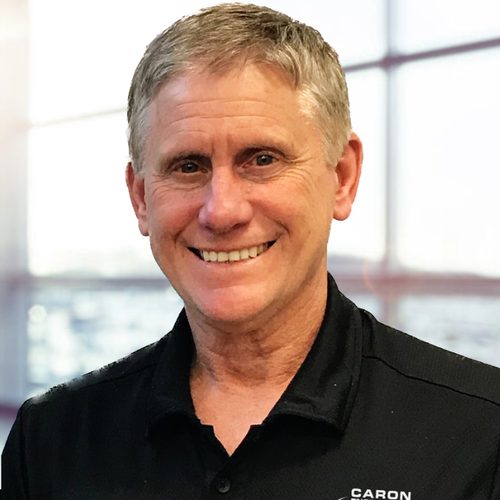
Rob Caron
President, CEO & Founder
Caron Engineering, Inc.
Rob Caron is a licensed Professional Engineer and President, CEO, and founder of Caron Engineering, Inc., established in 1986. Caron Engineering develops retrofit smart technology solutions for CNC machine tools, helping manufacturers automate, optimize, and digitize machining processes. Rob has led the development of the company's hardware and software portfolio and continues to guide its technical vision. His background includes electrical training, CNC service engineering, and control integration. Widely recognized as a pioneer in tool monitoring, automation, and process control, Rob has helped advance technologies for unattended machining, adaptive control, tool setting, vibration analysis, and in-machine measurement.
FK
Frank Krazer
Systems Engineer
Hexagon Manufacturing Intelligence
Frank Krazer is a Systems Engineer at Hexagon Manufacturing Intelligence, where he focuses on integrating and automating industrial metrology equipment for manufacturing. Since 2015, he has worked with 3D coordinate measuring machines and large-volume laser tracker systems. He uses precision measurement data to improve manufacturing quality, throughput, and path correction. His recent work includes developing IT/OT solutions that connect measurement systems with CNCs, robots, and enterprise software. By linking physical manufacturing systems with digital platforms, he enables real-time feedback and smarter automation for industrial environments.
MJ
Michael Jabbour
Siemens Government Technologies (SGT)
RW
Romario Wallace
Cranium
11:00 AM – 12:15 PM
Panel B — Cyber-Physical Security & Resilience in Power and Energy Systems
FCAE Lower-Level Rm 010 & 025
7 speakers
Panel B — Cyber-Physical Security & Resilience in Power and Energy Systems
FCAE Lower-Level Rm 010 & 025
Moderators
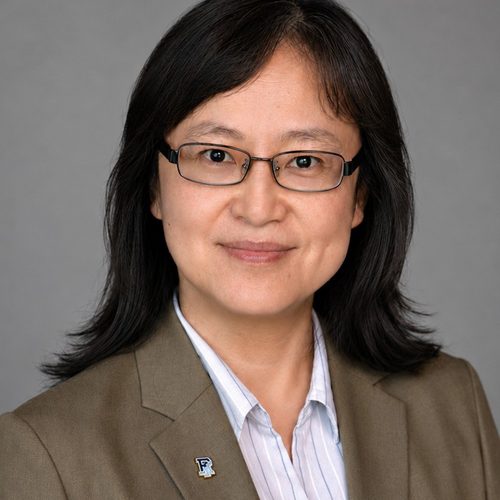
Yan Lindsay Sun
Professor & Chair, ECBE; Co-Director, CYPHER
University of Rhode Island
Yan (Lindsay) Sun is an IEEE Fellow, Professor and Chair of Electrical, Computer, and Biomedical Engineering at the University of Rhode Island. She is the founding director and current co-director of the Center for Cyber-Physical Intelligence and Security (CYPHER). Her work focuses on the security and resilience of cyber-physical systems, particularly power grid and energy systems, and on trustworthy AI for mission-critical applications. She has received multiple best paper awards, the Distinguished Alumni Award from the University of Maryland Department of Electrical and Computer Engineering, and previously served on Congressman Jim Langevin's Cybersecurity Advisory Committee.
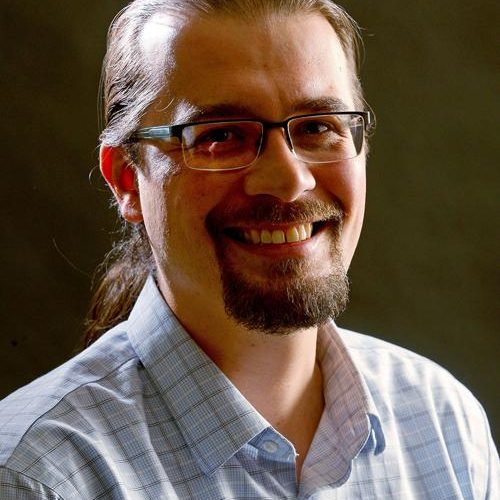
Dayne Broderson
Senior Technology & Strategic Advisor, ACEP
University of Alaska Fairbanks
Dayne Broderson is a Senior Technology and Strategic Advisor at ACEP with over 20 years of experience leading research teams, managing programs, and developing cyberinfrastructure platforms for research and operational environments. He provides strategic leadership in technology and innovation, with a focus on building cyber capacity for research and operational partners in Alaska. At ACEP, Dayne works to connect community, industry, academic, research, and government partners around shared technology initiatives. A self-described tech geek, he has a particular passion for exploring and sharing the possibilities of emerging technologies, with a special fondness for Linux and networked systems.
Panelists
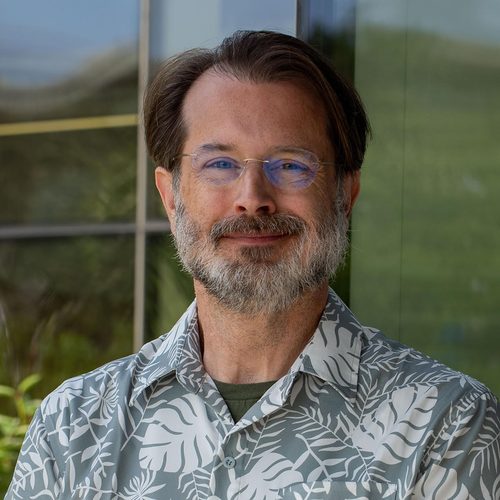
John Haverlack
Information Security Lead, ACEP
University of Alaska Fairbanks
John Haverlack is the Information Security Lead for the Alaska Center for Energy and Power (ACEP) at the University of Alaska Fairbanks, specializing in data management, cyberinfrastructure, and cybersecurity. A technology generalist with nearly 30 years of public and private sector experience, he recently designed and maintained the critical cyberinfrastructure onboard the R/V Sikuliaq. He also served as a consultant to the U.S. Academic Research Fleet, helping establish its modern cybersecurity program. Haverlack's expertise in navigating technical controls and cyber risk regulations directly supports secure, resilient energy systems and maritime research infrastructure.
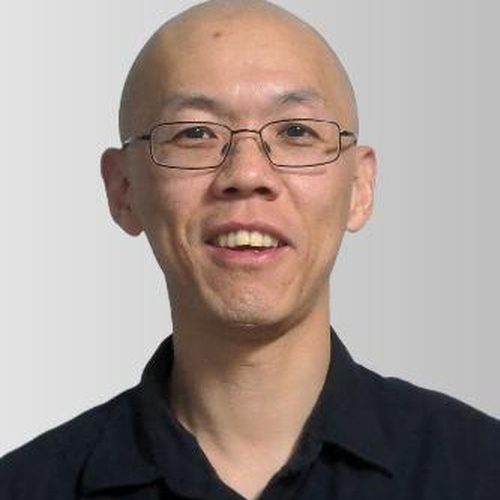
Hui Hugo Lin
Associate Professor; Technical Co-Director, CYPHER
University of Rhode Island
Hui Lin is an Associate Professor in the Department of Electrical, Computer, and Biomedical Engineering at the University of Rhode Island and technical co-director of the Center for Cyber-Physical Intelligence & Security (CYPHER). He earned his Ph.D. in Electrical and Computer Engineering from the University of Illinois Urbana-Champaign in 2017. His research focuses on cybersecurity, intrusion detection, programmable networks, and machine learning for cyber-physical systems, including power and manufacturing systems. His work has been sponsored by NSF, DOE, and DOD, and he has received NSF CAREER and CRII awards.
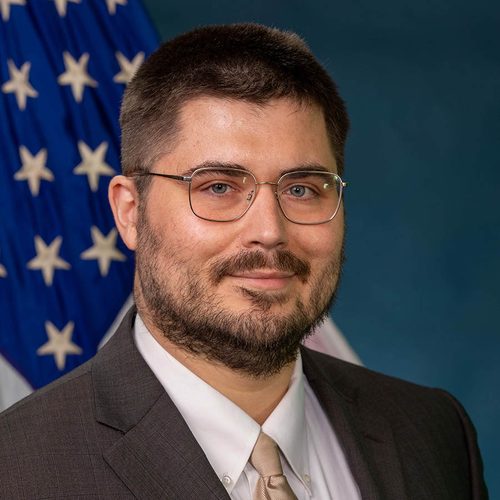
Ben Drozdenko
Cybersecurity Science & Technology Lead
Naval Undersea Warfare Center (NUWC) Division Newport
Dr. Ben Drozdenko is the Cybersecurity Science & Technology Lead at Naval Undersea Warfare Center Division Newport. He leads Cyber research and development projects in the areas of Artificial Intelligence and Machine Learning for situational awareness, Cyber-survivable model-based systems engineering, and ONR-sponsored laboratory projects involving software debloat and hardening. He has over 20 years of prior experience as a Cyber Engineering professor at Louisiana Tech University, MathWorks specialist & training engineer, and Raytheon systems engineer. He has a Ph.D. in Computer Engineering (Northeastern, 2017), M.S. in Electrical Engineering (Northeastern, 2007), and B.S. in Computer Systems Engineering (RPI, 2004).
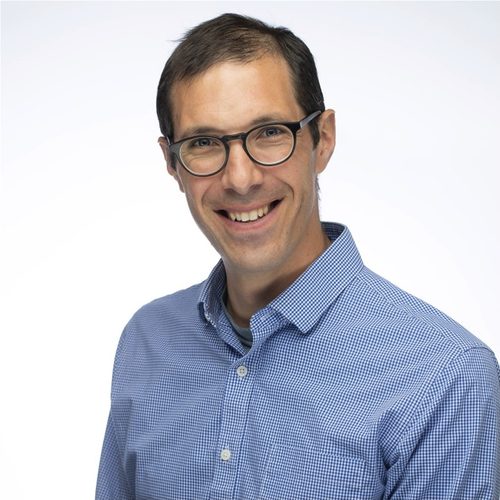
Constantine "Dean" Macris
Chief Information Security Officer
Dispel
Constantine (Dean) Macris is a native of Mystic, Connecticut. He earned his undergraduate degree in Marine Systems Engineering from the U.S. Merchant Marine Academy and later completed an MBA in Management Information Systems at the University of Connecticut. He is currently a Ph.D. candidate in Electrical and Computer Engineering at the University of Rhode Island. Dean is also a reserve officer in the U.S. Navy and an industry expert in operational technology and network security. He currently serves as Chief Information Security Officer at Dispel.
NS
Natasha Slade
AI Risk Technical Liaison
General Dynamics Electric Boat
1:15 – 2:45 PM
Breakout A — Digital Twins Overview for Engineering
Introduction to digital-twin concepts, modeling approaches, and engineering applications.
FCAE Lower-Level Rm 040
3 speakers
Breakout A — Digital Twins Overview for Engineering
Introduction to digital-twin concepts, modeling approaches, and engineering applications.
FCAE Lower-Level Rm 040
Session Leaders
Vahid Jahangiri
Assistant Professor, Mechanical, Industrial & Systems Engineering
University of Rhode Island
Dr. Vahid Jahangiri is an Assistant Professor in the Department of Mechanical, Industrial, and Systems Engineering at the University of Rhode Island. His research focuses on digital twins, structural health monitoring, offshore wind energy systems, vibration control, and data-driven modeling for infrastructure and energy applications. Before joining URI, he worked as an R&D Engineer at Leeward Renewable Energy and as a Postdoctoral Scholar at the University of Nevada, Reno. He earned his Ph.D. in Civil Engineering from Louisiana State University.
Yeonho Jeong
Assistant Professor, ECBE
University of Rhode Island
Dr. Yeonho Jeong is an Assistant Professor in the Department of Electrical, Computer, and Biomedical Engineering at the University of Rhode Island. He received his Ph.D. in Electrical Engineering from KAIST, South Korea, in 2018. Prior to joining URI, he spent 10 years in industry at Samsung and Solu-M, developing high-performance server/network power systems, and later served as a Postdoctoral Researcher at the University of Colorado Denver, contributing to the DARPA Subterranean Challenge. His research focuses on power electronics, hybrid energy systems and power converters, energy management, and emerging technologies, including digital twins and electronic design automation, for power electronics.
Manbir Sodhi
Professor, Mechanical, Industrial & Systems Engineering
University of Rhode Island
Dr. Manbir S. Sodhi is a Professor of Mechanical, Industrial, and Systems Engineering at the University of Rhode Island. He earned his Ph.D. in Industrial Engineering from the University of Arizona and is recognized for research in optimization, manufacturing systems, sustainable engineering, cyber-physical systems, and digital twins. He has organized defense and industry workshops on fleet scheduling, smart manufacturing, and digital twins, served as department chair, and consulted with NATO, NUWC, and Submarine Forces Atlantic. His honors include the Carlotti Faculty Excellence Award and U.S. Navy Summer Faculty Fellowship.
1:15 – 2:45 PM
Breakout B — What Good Looks Like: Case Studies in OT Cybersecurity & AI/ML for Power and Energy Systems
FCAE Lower-Level Rm 010 & 025
3 speakers
Breakout B — What Good Looks Like: Case Studies in OT Cybersecurity & AI/ML for Power and Energy Systems
FCAE Lower-Level Rm 010 & 025
Session Leaders
Dayne Broderson
Senior Technology & Strategic Advisor, ACEP
University of Alaska Fairbanks
Dayne Broderson is a Senior Technology and Strategic Advisor at ACEP with over 20 years of experience leading research teams, managing programs, and developing cyberinfrastructure platforms for research and operational environments. He provides strategic leadership in technology and innovation, with a focus on building cyber capacity for research and operational partners in Alaska. At ACEP, Dayne works to connect community, industry, academic, research, and government partners around shared technology initiatives. A self-described tech geek, he has a particular passion for exploring and sharing the possibilities of emerging technologies, with a special fondness for Linux and networked systems.
Yan Lindsay Sun
Professor & Chair, ECBE; Co-Director, CYPHER
University of Rhode Island
Yan (Lindsay) Sun is an IEEE Fellow, Professor and Chair of Electrical, Computer, and Biomedical Engineering at the University of Rhode Island. She is the founding director and current co-director of the Center for Cyber-Physical Intelligence and Security (CYPHER). Her work focuses on the security and resilience of cyber-physical systems, particularly power grid and energy systems, and on trustworthy AI for mission-critical applications. She has received multiple best paper awards, the Distinguished Alumni Award from the University of Maryland Department of Electrical and Computer Engineering, and previously served on Congressman Jim Langevin's Cybersecurity Advisory Committee.
Ben Drozdenko
Cybersecurity Science & Technology Lead
Naval Undersea Warfare Center (NUWC) Division Newport
Dr. Ben Drozdenko is the Cybersecurity Science & Technology Lead at Naval Undersea Warfare Center Division Newport. He leads Cyber research and development projects in the areas of Artificial Intelligence and Machine Learning for situational awareness, Cyber-survivable model-based systems engineering, and ONR-sponsored laboratory projects involving software debloat and hardening. He has over 20 years of prior experience as a Cyber Engineering professor at Louisiana Tech University, MathWorks specialist & training engineer, and Raytheon systems engineer. He has a Ph.D. in Computer Engineering (Northeastern, 2017), M.S. in Electrical Engineering (Northeastern, 2007), and B.S. in Computer Systems Engineering (RPI, 2004).
3:15 – 4:30 PM
Mini Tutorial A — Industry 4.0 / Shipyard 4.0: “It Starts on the Shop Floor”
Digital-twin and connected-equipment concepts applied to shipyard environments.
FCAE Lower-Level Rm 040
2 speakers
Mini Tutorial A — Industry 4.0 / Shipyard 4.0: “It Starts on the Shop Floor”
Digital-twin and connected-equipment concepts applied to shipyard environments.
FCAE Lower-Level Rm 040
Presenters
Stephen Eacuello
Ph.D. Candidate & Software Engineer
University of Rhode Island & Arcfield
Stephen S. Eacuello is a software engineer, manufacturing professional, and doctoral researcher with more than two decades of experience in advanced manufacturing, industrial automation, systems engineering, and digital transformation. He is currently a Software Engineer at Arcfield (formerly Rite-Solutions) and a Ph.D. student in Industrial and Systems Engineering at the University of Rhode Island. His background includes 15 years at LeachGarner and 7 years at Prysmian Group in precision manufacturing environments. His research focuses on smart manufacturing, AI, sensor fusion, cybersecurity, digital twins, and cyber-physical systems, with an emphasis on secure, data-driven industrial systems and hands-on Industry 4.0 education.
SB
Steven Blum
Ph.D. Candidate & Commander, U.S. Coast Guard
University of Rhode Island & U.S. Coast Guard
3:15 – 4:30 PM
Mini Tutorial B — Part 1: TTX (Tabletop Exercise)
Energy-sector cybersecurity tabletop exercise — exploring vulnerabilities and defense strategies. Exercises initiated on Day 1 continue on Day 2.
FCAE Lower-Level Rm 010 & 025
2 speakers
Mini Tutorial B — Part 1: TTX (Tabletop Exercise)
Energy-sector cybersecurity tabletop exercise — exploring vulnerabilities and defense strategies. Exercises initiated on Day 1 continue on Day 2.
FCAE Lower-Level Rm 010 & 025
Session Leaders
John Haverlack
Information Security Lead, ACEP
University of Alaska Fairbanks
John Haverlack is the Information Security Lead for the Alaska Center for Energy and Power (ACEP) at the University of Alaska Fairbanks, specializing in data management, cyberinfrastructure, and cybersecurity. A technology generalist with nearly 30 years of public and private sector experience, he recently designed and maintained the critical cyberinfrastructure onboard the R/V Sikuliaq. He also served as a consultant to the U.S. Academic Research Fleet, helping establish its modern cybersecurity program. Haverlack's expertise in navigating technical controls and cyber risk regulations directly supports secure, resilient energy systems and maritime research infrastructure.
Ben Drozdenko
Cybersecurity Science & Technology Lead
Naval Undersea Warfare Center (NUWC) Division Newport
Dr. Ben Drozdenko is the Cybersecurity Science & Technology Lead at Naval Undersea Warfare Center Division Newport. He leads Cyber research and development projects in the areas of Artificial Intelligence and Machine Learning for situational awareness, Cyber-survivable model-based systems engineering, and ONR-sponsored laboratory projects involving software debloat and hardening. He has over 20 years of prior experience as a Cyber Engineering professor at Louisiana Tech University, MathWorks specialist & training engineer, and Raytheon systems engineer. He has a Ph.D. in Computer Engineering (Northeastern, 2017), M.S. in Electrical Engineering (Northeastern, 2007), and B.S. in Computer Systems Engineering (RPI, 2004).
Open Session · Day 2
Going Deeper: Research, Tools & Hands-On Practice
Program logic: Day 3 shifts from landscape to depth. Morning sessions go technical; research talks and student demos show the state of the art; and the mini tutorials build directly on each other before the optional afternoon collaboration session.
8:45 – 9:30 AM
Invited Talk — Samsung Shipyard Overview
FCAE Lower-Level Rm 040
1 speaker
Invited Talk — Samsung Shipyard Overview
FCAE Lower-Level Rm 040
Speaker
SJ
Seokho Jung
Invited Speaker
Samsung
9:30 – 10:30 AM
AI Depth Forum
Four 15-minute talks: Dayne Broderson — “Designing Knowledge Vaults for Human and Machine Consumption”; Yan Lindsay Sun — “Responsible AI in Practice”; John Haverlack — “Brokering Trust Between Humans and AI Agents”; Ben Drozdenko — “How AI is Changing the Cyber-scape.”
FCAE Lower-Level Rm 040
4 speakers
AI Depth Forum
Four 15-minute talks: Dayne Broderson — “Designing Knowledge Vaults for Human and Machine Consumption”; Yan Lindsay Sun — “Responsible AI in Practice”; John Haverlack — “Brokering Trust Between Humans and AI Agents”; Ben Drozdenko — “How AI is Changing the Cyber-scape.”
FCAE Lower-Level Rm 040
Speakers
Dayne Broderson
Senior Technology & Strategic Advisor, ACEP
University of Alaska Fairbanks
Dayne Broderson is a Senior Technology and Strategic Advisor at ACEP with over 20 years of experience leading research teams, managing programs, and developing cyberinfrastructure platforms for research and operational environments. He provides strategic leadership in technology and innovation, with a focus on building cyber capacity for research and operational partners in Alaska. At ACEP, Dayne works to connect community, industry, academic, research, and government partners around shared technology initiatives. A self-described tech geek, he has a particular passion for exploring and sharing the possibilities of emerging technologies, with a special fondness for Linux and networked systems.
Yan Lindsay Sun
Professor & Chair, ECBE; Co-Director, CYPHER
University of Rhode Island
Yan (Lindsay) Sun is an IEEE Fellow, Professor and Chair of Electrical, Computer, and Biomedical Engineering at the University of Rhode Island. She is the founding director and current co-director of the Center for Cyber-Physical Intelligence and Security (CYPHER). Her work focuses on the security and resilience of cyber-physical systems, particularly power grid and energy systems, and on trustworthy AI for mission-critical applications. She has received multiple best paper awards, the Distinguished Alumni Award from the University of Maryland Department of Electrical and Computer Engineering, and previously served on Congressman Jim Langevin's Cybersecurity Advisory Committee.
John Haverlack
Information Security Lead, ACEP
University of Alaska Fairbanks
John Haverlack is the Information Security Lead for the Alaska Center for Energy and Power (ACEP) at the University of Alaska Fairbanks, specializing in data management, cyberinfrastructure, and cybersecurity. A technology generalist with nearly 30 years of public and private sector experience, he recently designed and maintained the critical cyberinfrastructure onboard the R/V Sikuliaq. He also served as a consultant to the U.S. Academic Research Fleet, helping establish its modern cybersecurity program. Haverlack's expertise in navigating technical controls and cyber risk regulations directly supports secure, resilient energy systems and maritime research infrastructure.
Ben Drozdenko
Cybersecurity Science & Technology Lead
Naval Undersea Warfare Center (NUWC) Division Newport
Dr. Ben Drozdenko is the Cybersecurity Science & Technology Lead at Naval Undersea Warfare Center Division Newport. He leads Cyber research and development projects in the areas of Artificial Intelligence and Machine Learning for situational awareness, Cyber-survivable model-based systems engineering, and ONR-sponsored laboratory projects involving software debloat and hardening. He has over 20 years of prior experience as a Cyber Engineering professor at Louisiana Tech University, MathWorks specialist & training engineer, and Raytheon systems engineer. He has a Ph.D. in Computer Engineering (Northeastern, 2017), M.S. in Electrical Engineering (Northeastern, 2007), and B.S. in Computer Systems Engineering (RPI, 2004).
1:00 – 3:00 PM
Student Demos & Poster Session
FCAE Lower Level · FCAE 180A
22 demos & posters
Student Demos & Poster Session
FCAE Lower Level · FCAE 180A
Power & Energy
FCAE Lower Level
Context-Aware Modular Intelligence for Cyber-Physical Smart Grids
Expert Device-Layer Agents for Enhanced On-Edge Intelligence in Cyber-Physical Systems
LSTM Autoencoder Ensemble for NMEA 2000 Intrusion Detection on Vessel Networks
Operationalizing AI Risk: Framework-Agnostic Taxonomy, Calibration, and Composite Risk Scoring
Programmable Security Solutions using SDN and P4
Measuring the Physical Impact of DNP3 Cyberattacks
ADAMANT: Real-Time Detection of Man-in-the-Middle Attacks in Industrial Control Systems Using Network Traffic Analysis
PING: Physics-Informed Graph Neural Networks to Generalize False Data Injection Attack Localization in Power Grids
In-Network Traffic Obfuscation for the Electric Grid Against Device Fingerprinting
Smart Home Automation through Home Assistant
Battery State of Health Estimation Using Multi-Step Kalman Filter with Sparse Measurements
Manufacturing
FCAE 180A
Unstoppable Automation: A Vendor-Agnostic Platform for Secure Industrial Automation and Interoperability
Rite-Solutions Shipyard 4.0 Digital Twin Testbed: A Secure and Resilient Smart Manufacturing Platform for Shipyard Innovation
Algorithm-to-Execution for Multi-Vehicle Routing in Warehouse Environments: Closing the Gap Between Combinatorial Optimization and Physical AGV Deployment
NiryoXR: Immersive VR Digital Twin for Robotic Control
Advancing Industry 4.0 with Fourth-Axis CNC: Subtractive Manufacturing with the ROWND Lathe
Shipyard 4.0 MES: A Smart Manufacturing Simulation Platform for Digital Shipyard Operations
G-Code Fingerprinting: Multimodal Sensor-Fusion Deep-Learning for CNC Toolpath Encoder & Machine Instructions Decoder
Hanoi ROS: Algorithm-to-Action using ROS2 and Hanoi Towers
Industry Partner Demos
FCAE 180A
Caron Engineering: CNC Machining Automation Technology & Real-Time Adaptive Control
Siemens: Sinumerik One CNC Controller & Digital Twin Software
Hexagon: 3D Scanning Arm
3:00 – 4:15 PM
Smart Manufacturing Forum — Vendor-Agnostic Orchestration of Heterogeneous Industrial Systems for Shipbuilding
FCAE Lower-Level Rm 040
1 speaker
Smart Manufacturing Forum — Vendor-Agnostic Orchestration of Heterogeneous Industrial Systems for Shipbuilding
FCAE Lower-Level Rm 040
Session Leader & Presenter
RP
Romesh Prasad
Postdoctoral Researcher
University of Rhode Island
3:00 – 4:15 PM
Mini Tutorial D — Part 2: TTX — Emerging Practices in Cyber-Physical Security & Resilience
FCAE Lower-Level Rm 010 & 025
2 speakers
Mini Tutorial D — Part 2: TTX — Emerging Practices in Cyber-Physical Security & Resilience
FCAE Lower-Level Rm 010 & 025
Session Leaders
John Haverlack
Information Security Lead, ACEP
University of Alaska Fairbanks
John Haverlack is the Information Security Lead for the Alaska Center for Energy and Power (ACEP) at the University of Alaska Fairbanks, specializing in data management, cyberinfrastructure, and cybersecurity. A technology generalist with nearly 30 years of public and private sector experience, he recently designed and maintained the critical cyberinfrastructure onboard the R/V Sikuliaq. He also served as a consultant to the U.S. Academic Research Fleet, helping establish its modern cybersecurity program. Haverlack's expertise in navigating technical controls and cyber risk regulations directly supports secure, resilient energy systems and maritime research infrastructure.
Ben Drozdenko
Cybersecurity Science & Technology Lead
Naval Undersea Warfare Center (NUWC) Division Newport
Dr. Ben Drozdenko is the Cybersecurity Science & Technology Lead at Naval Undersea Warfare Center Division Newport. He leads Cyber research and development projects in the areas of Artificial Intelligence and Machine Learning for situational awareness, Cyber-survivable model-based systems engineering, and ONR-sponsored laboratory projects involving software debloat and hardening. He has over 20 years of prior experience as a Cyber Engineering professor at Louisiana Tech University, MathWorks specialist & training engineer, and Raytheon systems engineer. He has a Ph.D. in Computer Engineering (Northeastern, 2017), M.S. in Electrical Engineering (Northeastern, 2007), and B.S. in Computer Systems Engineering (RPI, 2004).
CUI Session II
Synthesis & Coordinated Path Forward
Program logic: The final CUI day closes the loop opened on Monday. Having heard the open-session perspectives, research, and hands-on exercises, participants synthesize what was learned and translate it into coordinated action.
8:30 – 9:00 AM
Day 4 Welcome — Translating Open Session Themes into Naval Priorities
Fabian-Gaines Conference Room
3 speakers
Day 4 Welcome — Translating Open Session Themes into Naval Priorities
Fabian-Gaines Conference Room
Session Leaders
Paul Bancroft
Systems Engineer
Arcfield
Paul Boivin
Senior Cybersecurity Engineer
Arcfield
Alex Moulton
Arcfield
9:15 – 10:15 AM
CUI Panel C — Closing the Loop: Applying Open-Session Research to CUI Shipyard Challenges & Priorities
Fabian-Gaines Conference Room
4 speakers
CUI Panel C — Closing the Loop: Applying Open-Session Research to CUI Shipyard Challenges & Priorities
Fabian-Gaines Conference Room
Moderator
Paul Bancroft
Systems Engineer
Arcfield
Panelists
William Barnes
Chief Information Security Officer
General Dynamics Electric Boat
Geoff Davis
Principal Cyber Consultant
ABS Group
Gary Francella
U.S. Government Programs
Siemens Government Technologies (SGT)
10:30 – 11:30 AM
CUI Panel D — Closing the Loop: Shipboard CPS Vulnerabilities, Mission Context & Research Priorities
Fabian-Gaines Conference Room
4 speakers
CUI Panel D — Closing the Loop: Shipboard CPS Vulnerabilities, Mission Context & Research Priorities
Fabian-Gaines Conference Room
Moderator
Paul Boivin
Senior Cybersecurity Engineer
Arcfield
Panelists
Joe Bransfield
Scientific & Technical Intelligence Liaison Officer (STILO)
NUWC Division Newport
Bryan Enloe
Chief Information Officer
MIKEL Inc.
Ryan Nguyen
AI Capabilities Lead
Arcfield
12:30 – 1:45 PM
CUI Mini Tutorial A — LLMs for CPS Situational Awareness Dashboard
Fabian-Gaines Conference Room
1 speaker
CUI Mini Tutorial A — LLMs for CPS Situational Awareness Dashboard
Fabian-Gaines Conference Room
Presenter
Anissa Elias
Ph.D. Candidate & Software Engineer
University of Rhode Island & Arcfield
12:30 – 1:45 PM
CUI Mini Tutorial B — Cyber-Survivable Systems Architecture & Automated Cyber Situational Awareness / Incident Response
Rite-Way Conference Room
1 speaker
CUI Mini Tutorial B — Cyber-Survivable Systems Architecture & Automated Cyber Situational Awareness / Incident Response
Rite-Way Conference Room
Presenter
Ben Drozdenko
Cybersecurity Science & Technology Lead
Naval Undersea Warfare Center (NUWC) Division Newport